

Start by sweeping the border
An arrow with its head on the edge of the board, pointing outward, is always free. There’s nothing to check. Run your eye once around all four sides and shoot every one you find.
This does more than bank a few easy arrows. The border is where the board first comes apart, and each arrow you take off the rim gives the arrows behind it somewhere to go.
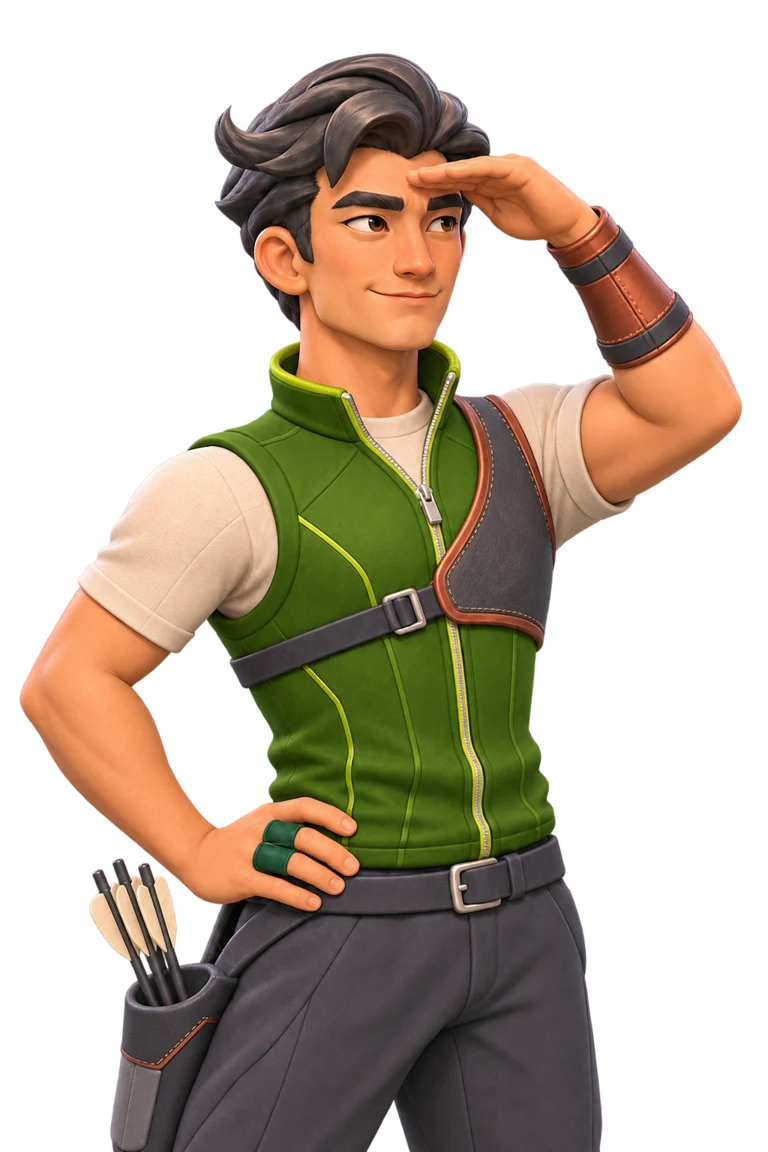
“Tell me what you notice first. Then shoot the easy ones.”
Zhao
Read the head, ignore the shaft
Long, winding shafts grab your attention, and they tell you almost nothing. The only question that matters for any arrow is what lies in the straight line ahead of its head.
Get used to spotting the heads as a separate pattern from the tangle of lines. Once you stop following shafts around their corners, the board gets a lot quieter.
The arrowhead shows the direction at a glance. You never need to work out which end is which by tracing the shaft.
Look in from the edge
This is the most reliable way to find a shot on a crowded board. Pick an edge and look inward along one row or column until you reach the first piece of any arrow. If that piece is a head pointing back at you, the arrow is free.
If it’s anything else, nothing can leave along that line from that side, so move on to the next one. It works because a free arrow always has an empty line from its head to the edge, which means its head is always the first thing you’ll meet coming the other way.
- Work along one edge at a time so you don’t check the same line twice.
- Change edges when one runs dry. A side that had nothing a minute ago may have opened up since.
- Late in the game, most lines are empty, and this becomes very fast.
Two arrows never stand off
Every board can be cleared, so two arrows can never be aimed straight at each other along the same line. Neither one could ever leave, and the board wouldn’t have been allowed.
That makes a useful warning. If it looks as though two heads are facing off, you’ve misread a row or a column. Look again before you tap, because the arrow you were about to shoot probably isn’t lined up with the one you think it is. More than a few bumps start right there.
Stay where the board just opened
Each arrow you shoot empties its squares, and the arrows most likely to have just become free are the ones aimed across those squares. Look along the rows and columns that run through the gap before you look anywhere else.
Rescanning the whole board after every shot is the slowest habit in this game. Follow the opening instead, and shots tend to lead to more shots, sometimes across the whole board.
Go after the long arrows
A long arrow covers a lot of squares, so it sits in a lot of other arrows’ lines. When a long arrow is free, take it. Clearing one can release several others at once.
When you’re short of shots, look for what is holding up the most arrows and ask what is holding that up. A little thought about which arrow is the real obstacle beats scanning the same crowded corner again.
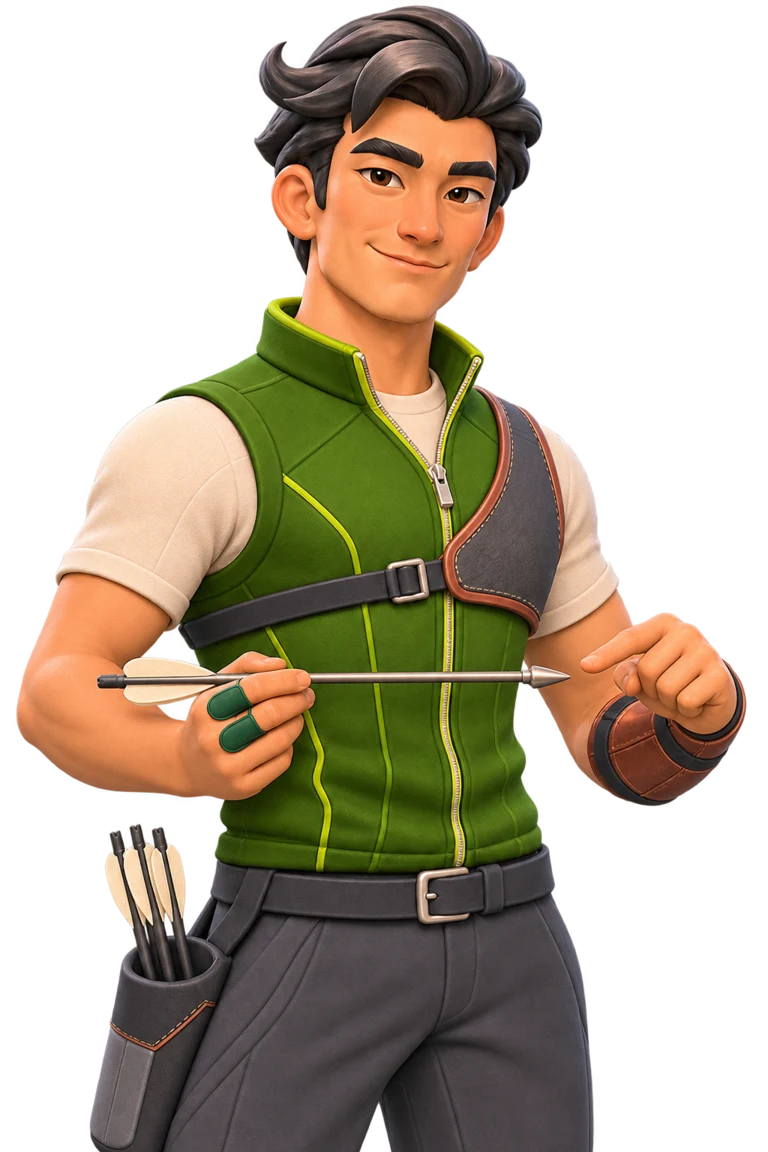
“Clear the big one and watch how many lanes open. I never get tired of that.”
Zhao
Treat a bump as expensive
Five seconds is a long time once you’re moving well. It’s worth several clean shots, so a bump costs far more than the moment it takes to confirm a line. If a tap is a coin flip, look a little longer. If you’re sure, tap without hesitating.
Bumps tend to come in bunches. Rushing after a mistake to win the time back is how one penalty turns into three. Take a breath, find one shot you’re certain of and get your rhythm back.
Lines are easiest to misjudge on the long way across the board. Check the far half of a line with extra care.
Use hints to break a stall
A hint costs no time on the clock and shows you one arrow that’s free. If you’ve been staring for a while, it can be cheaper than continuing to hunt, and it’s much cheaper than guessing. It does stay on your daily record, so if you’re chasing a clean solve, save it for when you really need it.
Speed up at the end
A board clears slowly and then all at once. For the first part of the game you’ll be hunting for each shot. By the last third, most lines are open and nearly everything can leave, so this is the time to stop checking so carefully and let your hands go.
You don’t have to wait for one arrow to finish flying before you take the next shot, so the last stretch can go very quickly.
Practice on the boards you missed
Recent days stay open in the Game Panel, and every one is a full board. Playing a couple in a row is the quickest way to train your eye, because what improves isn’t knowledge, it’s how fast you notice things.
Pick one habit at a time. Spend a board looking in from the edges, or one following the openings, or one trying not to bump at all, and watch what it does to your time.